
Scaling up centrifugation for industrial processing requires coordinated control of rotor dynamics, structural integrity, fluid flow and thermal management to hit target throughput and cut size Benchtop centrifuge. Designers select decanter, disk‑stack, tubular or basket architectures by matching g‑force, residence time and phase characteristics. Materials, seals and bearings are specified for corrosion, fatigue and maintenance access. Feed distribution, slip and heat loads are quantified to optimize efficiency and reliability. Continued text explains tradeoffs, rotor analyses and integration practices for implementation.
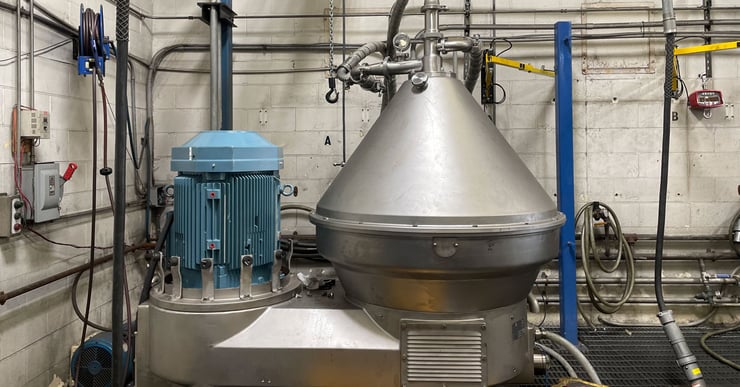
Fundamental Engineering Principles for Large-Scale Centrifuges
Begin by establishing the key physical and mechanical constraints that govern large-scale centrifuge design: rotational dynamics (centrifugal force distribution, critical speeds, and vibration modes), structural integrity (stress concentration, material fatigue, and rotor balancing), fluid mechanics (feed distribution, phase separation efficiency, and slip), thermal management (heat generation from bearings and drive systems, temperature gradients affecting material properties), and process integration (throughput, control systems, and maintenance accessibility). The engineer evaluates rotor dynamics to predict modal responses and safe operating envelopes, specifying materials and geometries to minimize stress concentration and fatigue. Feed distribution and interface slip are quantified to optimize separation efficiency Lab Alliance. Thermal loads inform bearing lubrication regimes and cooling strategies. Control architecture prioritizes predictable transients and accessible maintenance. Design decisions balance robustness, serviceability, and performance within operational freedom constraints.
Comparing Industrial Centrifuge Designs and Their Applications
Centrifuge-class selection hinges on matching mechanical architecture to separation task, balancing rotor speed, throughput, and phase characteristics to achieve required cut size and clarity. Industrial designs — decanter, disk-stack, tubular, and basket centrifuges — are compared by separation mechanism, capacity, and adaptability. Flow dynamics and noise control are pivotal: laminar-to-turbulent shifts, shear sensitivity, and acoustic damping inform choice. Applications span solids dewatering, oil–water separation, bioprocess clarification, and polymer fractionation, each demanding specific rpm, G-force distribution, and discharge mode.
- Decanter: high solids throughput, continuous conveyor feed, robust for viscous slurries.
- Disk-stack: high g, fine particle clarification, compact footprint.
- Tubular: maximum G for ultrafine separations, low hold-up.
- Basket: batch purity, gentle handling, scalable flexibility.

Practical Integration, Materials, and Maintenance Considerations
In integrating a centrifuge into an industrial process, alignment of mechanical interfaces, utilities, and control systems with plant infrastructure is critical to reliable operation. Selection of corrosion-resistant alloys, seals, and coatings must match fluid chemistry and permit extended run intervals while preserving interchangeability. Layout must allow access for routine inspection, filter replacement, and bearing service without disrupting upstream or downstream lines. Automation strategies should prioritize deterministic control, fault-tolerant interlocks, and remote diagnostics to enable operator autonomy and safe shutdowns. Energy recovery options, including waste-heat capture from drives and regenerative braking, improve lifecycle economics when integrated with plant energy management. Maintenance protocols emphasize condition-based monitoring, spare-part rationalization, and documented procedures to minimize downtime and protect throughput.